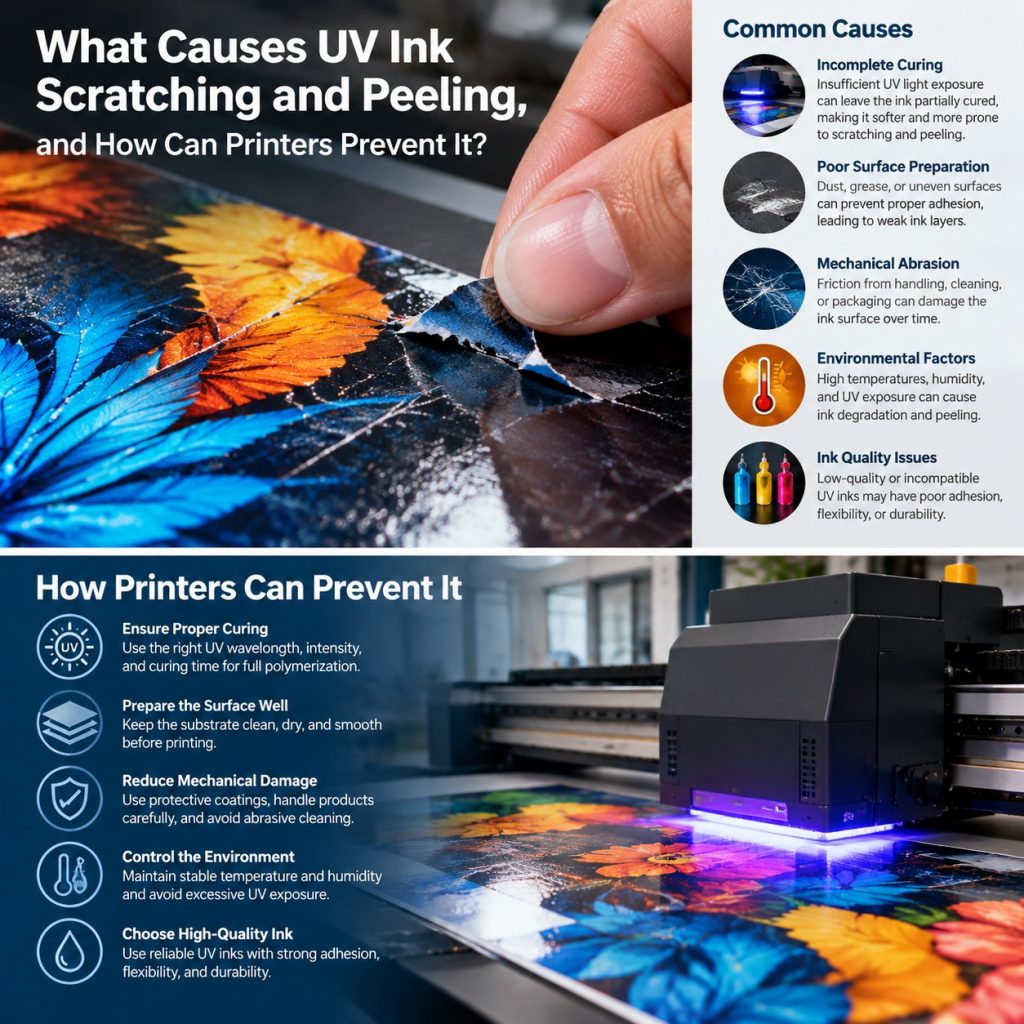
What Causes UV Ink Scratching and Peeling, and How Can Printers Prevent It?
 A customer runs a fingernail across a freshly printed label, and the ink flakes off like sunburned skin. That single moment of friction can undo an entire print run, a client relationship, and a reputation built over years. Yet most UV ink failures are not random accidents. They follow predictable patterns, and once you understand those patterns, you can shut them down before they ever reach the customer’s hands.
Let’s start with the uncomfortable truth: scratching and peeling are rarely the ink’s fault alone. UV ink is a chemistry kit that only finishes reacting when it hits the lamp. If any part of that chain breaks, adhesion and surface toughness collapse together. The most common culprits fall into a handful of categories.
The first is undercuring. UV ink does not dry the way solvent ink does. It cures through a photochemical reaction, which means the photoinitiators need enough ultraviolet energy at the right wavelengths to trigger cross-linking all the way through the film. When a lamp is old, when the reflector is dirty, when the belt speed creeps up to chase a deadline, the ink may look dry on the surface while the bottom layer stays soft. That soft underbelly is where peeling begins. A simple thumb twist test or a tape pull on a test sheet can reveal what the eye cannot.
The second cause is substrate mismatch. UV inks are formulated for specific surface energies. Polypropylene, polyethylene, and some coated stocks sit at the low end of the dyne scale, and ink simply cannot grip a surface that refuses to be wet. Printers who skip a corona treatment or a primer on these materials are essentially asking ink to stick to Teflon. The fix is not more ink or more heat. It is proper surface preparation, verified with a dyne pen before the job starts, not after the complaints arrive.
Third comes ink film thickness. There is a persistent myth that laying down more ink produces a richer, more durable result. In UV printing, the opposite is often true. A film that is too thick cannot cure evenly through its depth. The surface skins over, the interior remains uncured, and the whole layer shears off under light abrasion. Running a thinner, well-controlled film usually produces a harder, more scratch-resistant surface than a heavy coat ever will.
Fourth, chemistry conflicts. Mixing inks from different manufacturers, adding too much reducer, or using an adhesion promoter meant for a different ink system can sabotage the cure. UV chemistry is balanced with extreme precision. Every additive you introduce is a variable that can interfere with cross-linking or plasticize the final film.
Fifth, mechanical stress after curing. Die-cutting, folding, stacking, and shrink wrapping all put pressure on the ink layer. If the ink has not fully cured, or if the substrate flexes more than the ink can tolerate, you get cracking along fold lines and edge chipping that looks like peeling but is really a flexibility problem. Choosing a flexible UV ink for flexible substrates matters more than most operators realize.
So what does prevention actually look like on the shop floor?
Start with disciplined lamp maintenance. Track lamp hours, clean reflectors on a fixed schedule, and measure UV output with a radiometer instead of trusting your eyes. Replace lamps before they fade, not after a job fails.
Test every new substrate. Run a dyne test, print a sample, and perform tape pull and cross-hatch adhesion tests before committing to a full run. Ten minutes of testing saves ten hours of reprinting.
Control your film weight. Work with your ink supplier to dial in the right anilox or screen mesh for the job, and resist the urge to flood the substrate.
Keep your chemistry clean. Use one ink system per press where possible, measure additives precisely, and never guess at ratios.
Match ink to application. A label that will be handled daily, a package that will be folded, and a sign that will sit outdoors all demand different formulations. Tell your supplier how the print will live, not just how it will look.
Finally, cure to completion. Adjust belt speed and lamp power based on real measurements, and confirm cure with a solvent rub test on every critical job.
None of this is glamorous work. It is the unglamorous discipline that separates print shops with repeat customers from shops that spend their weekends reprinting. UV ink is capable of extraordinary durability, brilliant color, and instant turnaround. It just refuses to forgive shortcuts. Give it the cure, the surface, and the chemistry it needs, and it will hold up to almost anything your customer’s fingernail, wallet, or warehouse can throw at it
 Nobody puts a


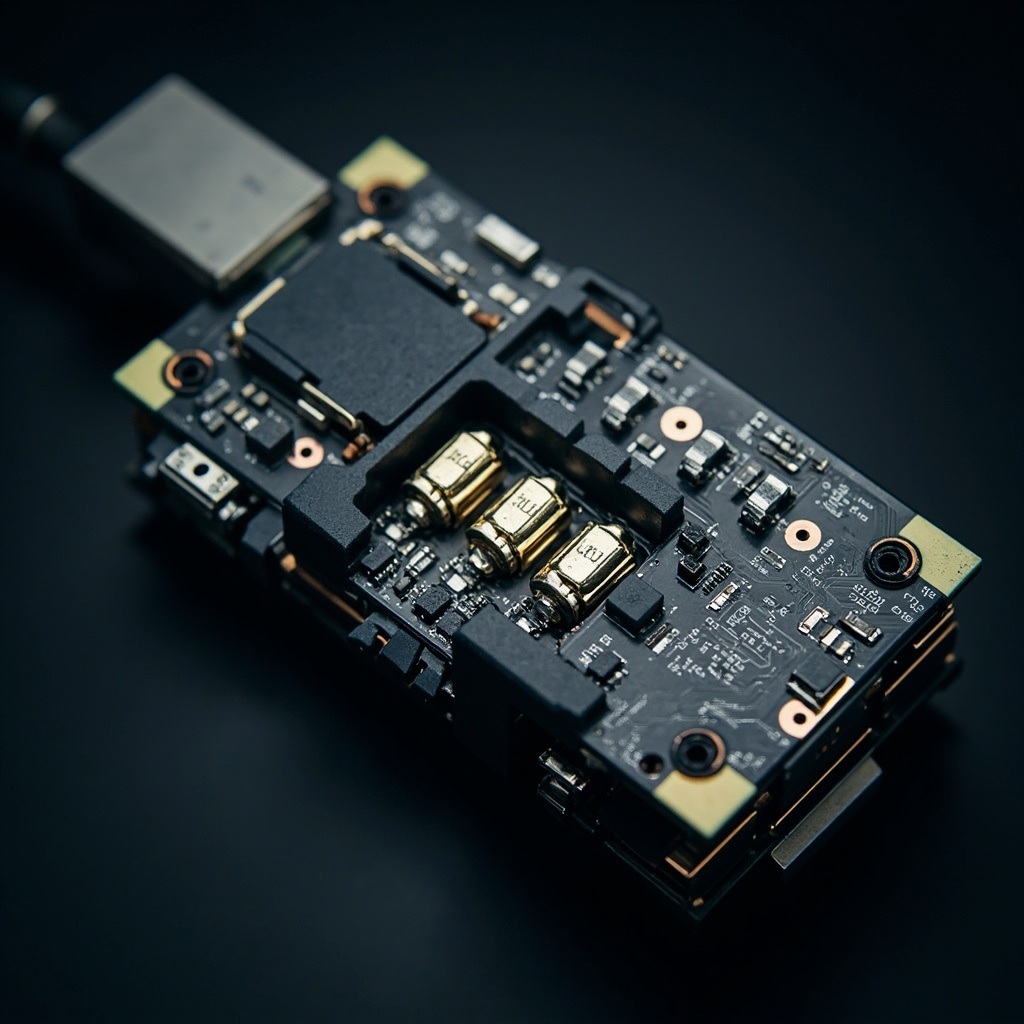
 You know that feeling when you fill a glass with water from a standard machine and you hear that gurgling, dripping sound of a tank running low? Or worse, you forget to turn it off and come back to a puddle on your counter. That frustration is exactly why the VitaOxy
 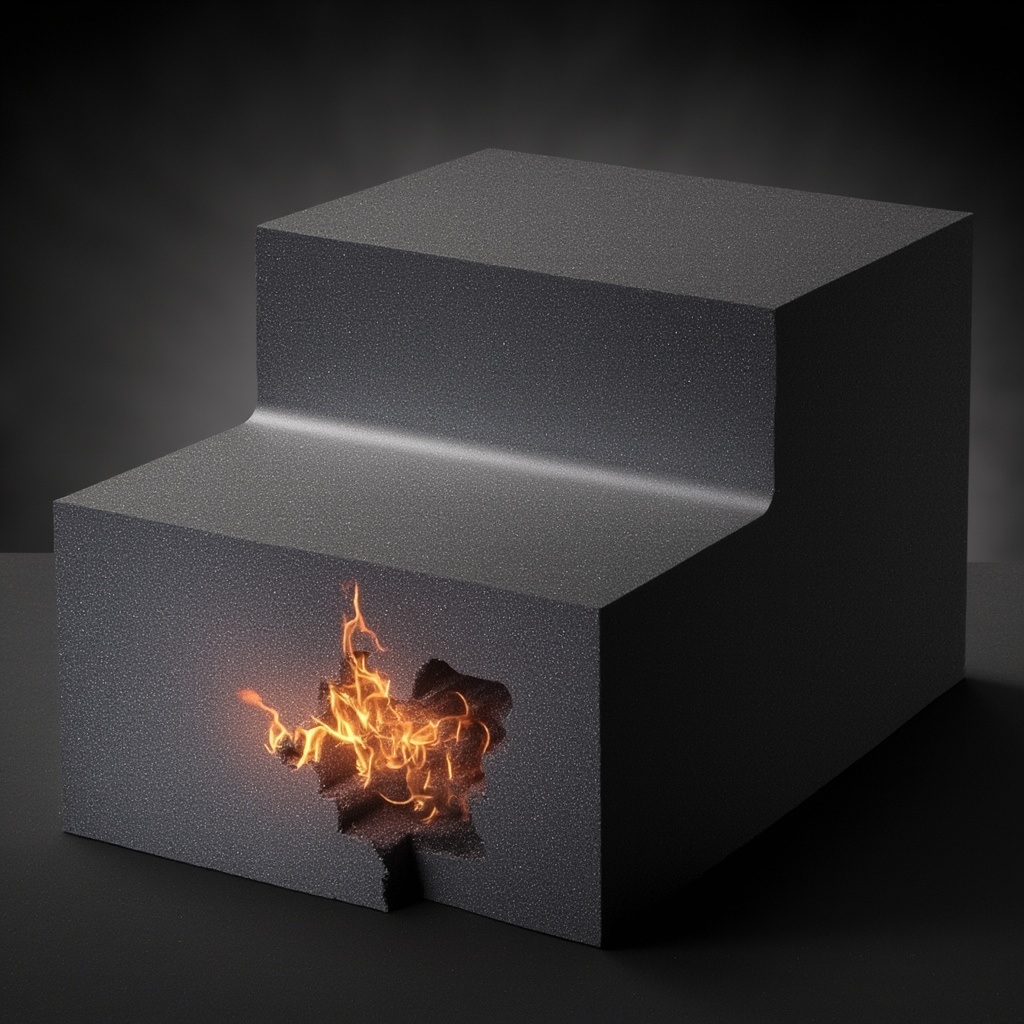 Let’s be brutally honest for a second: rigid polyurethane foam is a miracle of modern insulation, but it has a dirty little secret. It burns. And when it burns, it doesn’t just smolder politely—it collapses, drips, and feeds a fire with the enthusiasm of a teenager with a can of gasoline. For years, the industry has been playing a game of catch-up, trying to plug a specific hole in the safety profile of this otherwise brilliant material. That hole? The “flame inhibition gap.” The fix? A strange, worm-like mineral called